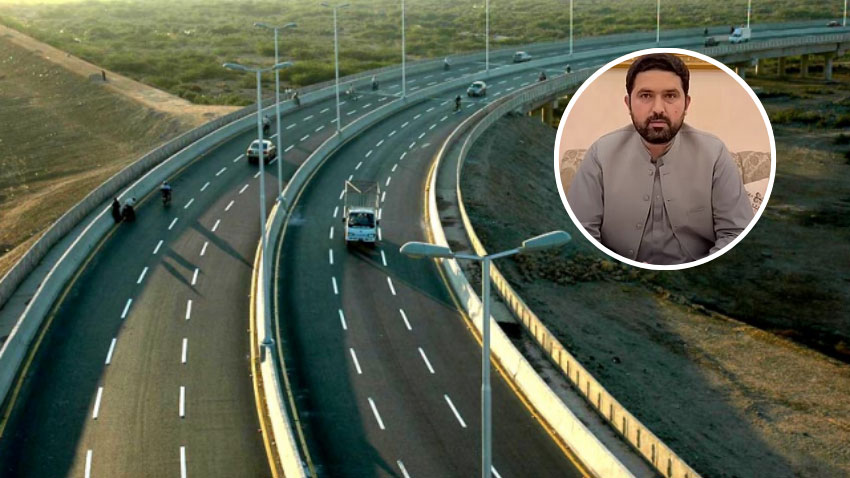
Chief Minister Khyber Pakhtunkhwa Muhammad Sohail Afridi chaired a high-level meeting to review progress on major road sector projects. These include Swat Motorway Phase II, the Peshawar–Dera Ismail Khan Motorway, and the Dir Motorway.
Officials briefed the chief minister on the current status of each project. During the meeting, several important decisions were taken to speed up development work.
Also Read: Karachi approves Rs4.2 billion for major road projects
The chief minister directed concerned departments to begin construction on Swat Motorway Phase II at the earliest. He called it a flagship project of the provincial government and ordered that all technical and administrative hurdles be resolved without delay.
Swat Motorway Phase II will be 80 kilometers long, stretching from Chakdara Interchange to Fatehpur. The project includes nine interchanges and seven bridges at different points over the Swat River.
The chief minister also shared that the foundation stone of the Peshawar–Dera Ismail Khan Motorway will be laid soon. This motorway will be 365 kilometers long and will include 19 interchanges and two tunnels.
The government plans to complete both Swat Motorway Phase II and the Peshawar–Dera Ismail Khan Motorway under a public-private partnership model.
Also Read: Non-bailable arrest warrants issued for KP CM Sohaib Afridi
For the Dir Motorway, it was decided in principle that the project will be built entirely using provincial resources.
Chief Minister Afridi directed all departments to quickly complete legal and administrative formalities so practical work can begin. He said the government is using available resources in a transparent way to promote development and improve access to remote areas of the province.