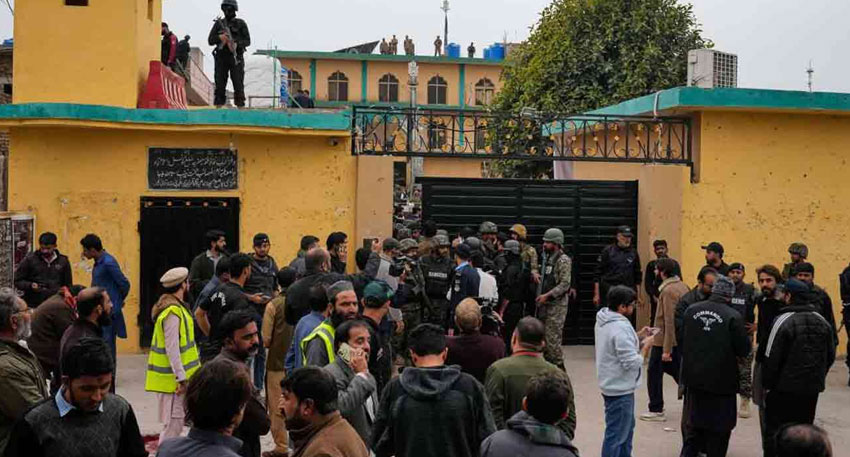
Security agencies have made a major breakthrough in the investigation of the deadly suicide blast that took place in the federal capital. The arrest of the main planner and his helpers has exposed a deeper and more dangerous terror network.
According to security sources, the Afghan mastermind behind the suicide attack at Imam Bargah and Mosque Khadijat-ul-Kubra in the suburban area of Tarlai Kalan has been arrested. Along with him, four facilitators who helped carry out the attack are also now in custody of law enforcement agencies.
Officials said intelligence agencies and law enforcement teams carried out joint operations in Peshawar and Nowshera. These raids were conducted using modern technical surveillance and human intelligence. As a result, key suspects were successfully tracked and arrested after careful planning.
Sources revealed that the arrested mastermind is an Afghan national and is believed to be linked with the banned militant group daesh. This connection has raised serious concerns about cross-border terror links and organized planning behind the attack.
Read more: Islamabad suicide bomber’s family targeted in nationwide operations
Investigators also discovered that the facilitators provided full support to the suicide bomber. They helped him with logistics, safe shelter, and movement before the attack. Authorities are continuing further interrogation, and more shocking revelations are expected in the coming days.
It is important to note that the tragic suicide blast resulted in the martyrdom of 33 people and left more than 150 injured. Most of the victims were worshippers present at the mosque during prayers. After the incident, security across Islamabad was placed on high alert, and monitoring at sensitive locations was further tightened.
Security officials have made it clear that operations against terrorism will continue under a zero tolerance policy. They stressed that no one involved in terrorism, directly or indirectly, will be spared.
This arrest is a major success for security agencies. It shows that intelligence tracking is improving. The afghan link makes the case more sensitive. It also proves that terror networks use local helpers. Strong action may help prevent future attacks. Continuous operations will be necessary to break such networks completely.