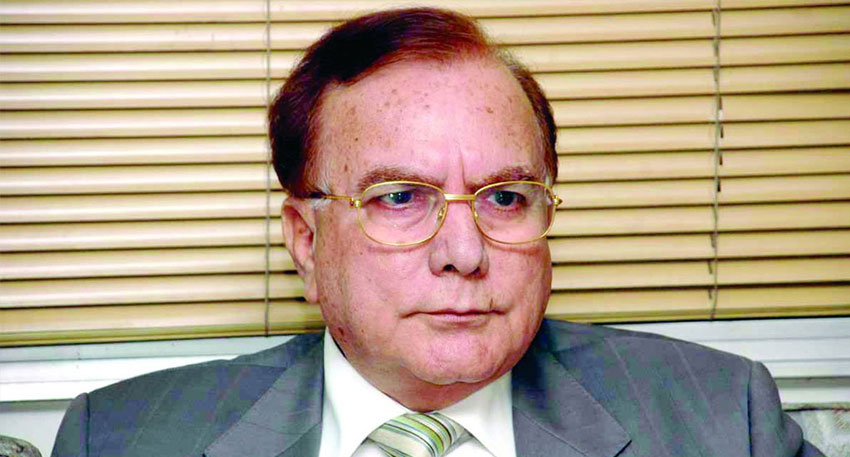
Former Punjab chief minister Mian Manzoor Ahmad Wattoo died in Lahore after a prolonged illness. He was 86 and is survived by three sons and four daughters. His family confirmed that funeral prayers will be offered at the Wasawewala Stadium in Okara.
Wattoo’s political struggle began from grassroots politics in Okara. He was first elected chairman of the Okara district council in 1983 and entered the Punjab Assembly in 1985, where he quickly rose to become speaker, marking the start of his climb in provincial politics.
Over the years, Wattoo became known for navigating shifting political tides. Elected multiple times as an MPA and MNA, he aligned with different political camps, including PML factions, PPP, PML-Q, and later PTI, always finding a way to remain politically relevant.
His most defining political struggle came in 1993, when he engineered a dramatic power shift in Punjab. Amid national turmoil following the dismissal of the Nawaz Sharif government, Wattoo rallied lawmakers, removed then chief minister Ghulam Haider Wyne, and installed himself as Punjab’s chief minister with PPP backing.
Wattoo later faced political setbacks, internal party splits, corruption cases, and even imprisonment. Despite these challenges, he staged comebacks, merged his party into PML-Q during Pervez Musharraf’s era, and returned to parliament in 2008, later joining PPP and becoming its central Punjab president.
He also served as federal minister for Kashmir affairs and remained active in politics until his final years, rejoining PPP last year. Presidents and prime ministers paid tribute to his role in strengthening democracy and shaping national politics.
Read more: Former Punjab CM Mian Manzoor Wattoo dies at 86
Wattoo’s political struggle was marked by resilience, controversy, and adaptability. He remained a central figure in Punjab’s politics for decades, often surprising allies and rivals alike with his next move.
Manzoor Wattoo’s journey shows how survival matters in politics. He faced defeats but always returned. His life reflects the realities of power politics in Punjab. His struggle will be debated for years to come.