According to demographic projections by the US Census Bureau and the United Nations (UN), Pakistan now holds a population density of ‘333 people per square kilometer’. The report describes Pakistan as one of South Asia’s most challenging demographic cases: a country growing more slowly than before, yet still adding millions each year.
The annual population growth rate is 1.82 percent, lower than previous decades but high enough to keep numbers rising for another generation.
The total fertility rate has fallen to 3.25 births per woman, still above the replacement level of 2.1. At the same time, life expectancy remains low at 60.5 years, while the under-five mortality rate is almost 65 deaths per 1,000 live births.
The report suggests Pakistan’s demographic transition is uneven. Family size is shrinking faster than improvements in lifespan and public health, deepening long-term challenges.
Regional comparison
India, with an estimated 1.46–1.47 billion people, has already reached below-replacement fertility at about 1.9. Its population will still rise for decades, but with a much slower pace.
Also Read: Punjab government confirms dates of Basant festival in Lahore
Bangladesh, despite extreme land pressure, has achieved replacement fertility and major improvements in child survival and life expectancy through education, healthcare, and strong family-planning outreach.
In contrast, Pakistan’s social indicators lag, despite having more land per person.
Afghanistan remains in a high-fertility, high-mortality cycle, much like Pakistan several decades ago. Conflict and weak institutions continue to slow its demographic progress.
A youthful nation under mounting pressure
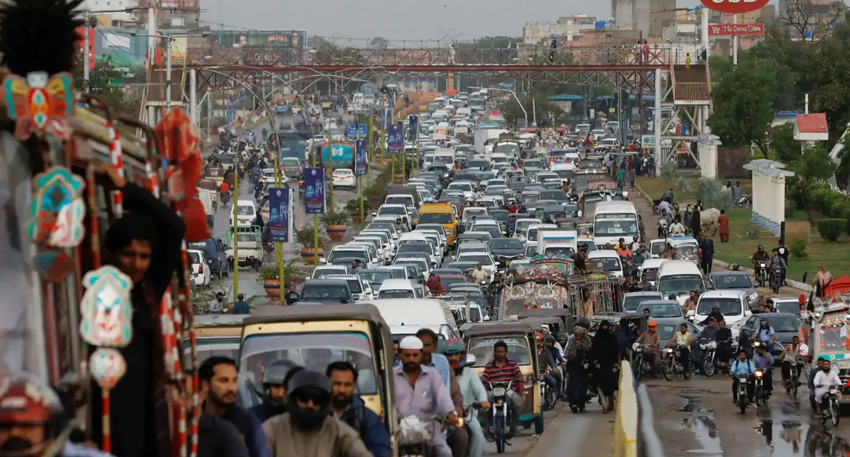
Pakistan’s population is heavily youth-dominated. This means growing pressure on education, housing, transport, and jobs through the 2030s and 2040s. Even with lower fertility, a large number of children today guarantees high demand for employment and services for many years.
An unfinished transition
Experts warn that Pakistan stands at a decisive point. If gains in girls’ education, healthcare, nutrition, and employment do not accelerate, the country may reach the second half of the century with both an ageing population and weak human capital.
They argue that the next two decades will determine whether Pakistan gains from its youth or faces deeper unemployment, migration pressure, and financial stress.