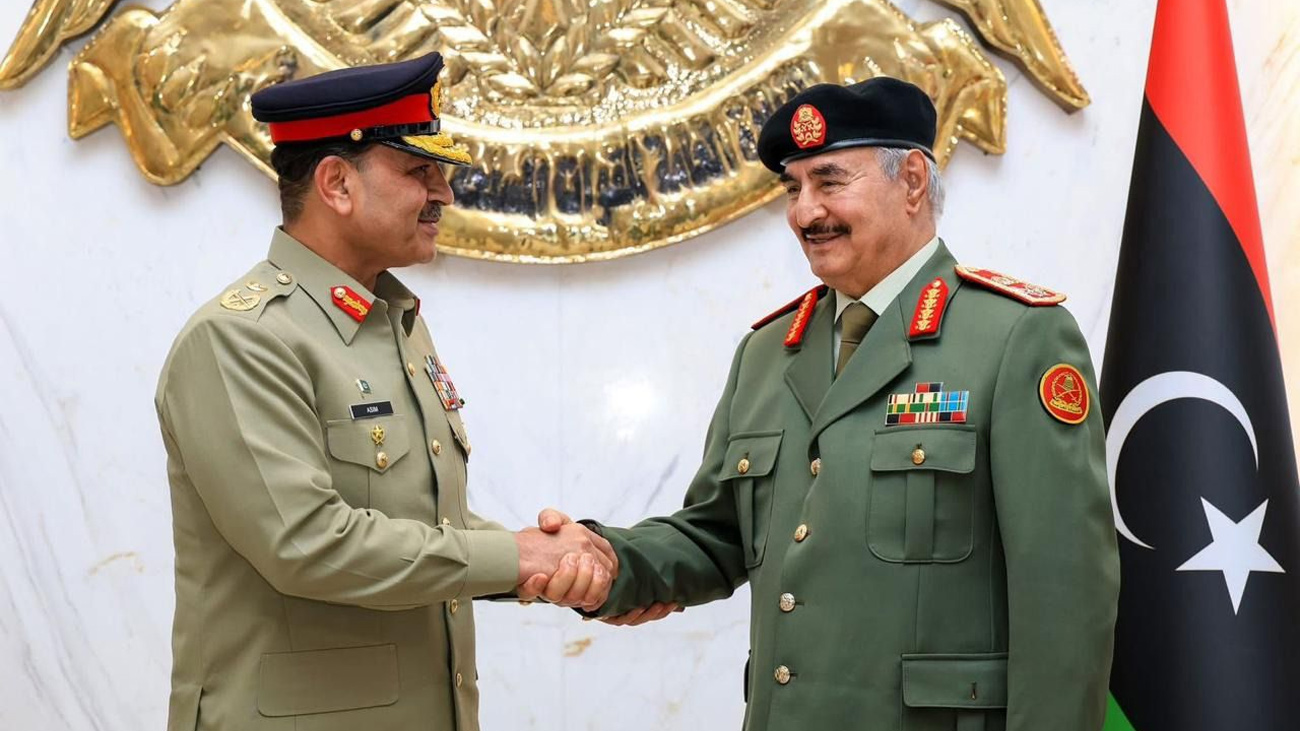
According to the Inter Services Public Relations (ISPR), the discussions focused on enhancing military-to-military cooperation and establishing frameworks for strategic training between the two nations.
ISPR stated that Field Marshal Asim Munir is currently on an official visit to Libya, where he met the Commander-in-Chief of the Libyan Armed Forces, Field Marshal Khalifa Belqasim Haftar, and Deputy Commander-in-Chief Lieutenant General Saddam Khalifa Haftar.
Upon his arrival, Field Marshal Asim Munir was given a guard of honour by a smartly turned-out contingent of the Libyan Armed Forces, reflecting the importance of the visit and the growing military relationship between the two countries.
During his meeting with Field Marshal Khalifa Haftar, the Pakistan Army Chief reiterated Pakistan’s desire to enhance defence and military-to-military cooperation with Libya based on shared strategic interests. The discussions focused on regional security, evolving defence challenges, and ways to strengthen bilateral military relations.
Also Read: Field Marshal assures full security for Sri Lankan cricket team
Both sides emphasized the need for closer collaboration in training, capacity building, and counter-terrorism efforts. ISPR said the talks also explored opportunities to expand cooperation in professional military exchanges and defence-related initiatives.
Field Marshal Khalifa Haftar praised the professionalism and operational excellence of the Pakistan Armed Forces and expressed interest in further expanding Pakistan-Libya defence cooperation. He highlighted Libya’s willingness to work closely with Pakistan in future defence and security projects.
The visit follows earlier high-level engagements between the two countries. In July, Lieutenant General Saddam Khalifa Haftar visited General Headquarters (GHQ) Rawalpindi, where both sides agreed to pursue defence industrial collaboration and the exchange of technical expertise to address modern security challenges.
Pakistan and Libya continue to strengthen their military relationship as part of broader efforts to promote regional stability, security cooperation, and defence partnerships.