

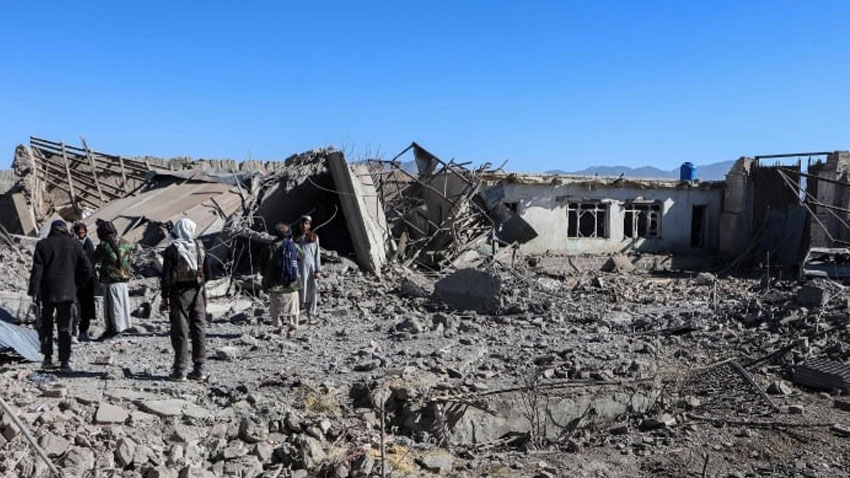
State Minister for Interior Talal Chaudhry said Pakistan carried out intelligence based strikes along the Pakistan-Afghan border. The action targeted seven terrorist camps and hideouts linked to Fitna al-Khawarij FAK, its affiliates and Daesh-Khorasan.
The strikes came after a wave of suicide attacks in Islamabad, Bajaur and Bannu. These attacks killed several civilians and security personnel, raising serious security concerns.
According to officials, at least 70 terrorists were killed in the cross border operation. The Ministry of Information and Broadcasting described the strikes as "precise and accurate" and a direct response to recent terrorism.
Chaudhry said, "Afghanistan has long been exporting terrorism. Pakistan is taking all actions to secure the life and property of its citizens," He added that around 70,000 intelligence based operations have already been conducted inside Pakistan, and several suspects have been arrested.
He also stated, "There is ample evidence suggesting that most of the slain terrorists were Pakistanis," stressing that handlers based in Afghanistan were behind recent attacks. Officials said the Tehreek e Taliban Pakistan TTP elements linked to FAK and Daesh claimed responsibility for the violence.
Recalling the 2020 Doha agreement, Chaudhry said, "However, Afghanistan and its interim government have failed to live up to their promise and have not stopped terrorism," He also noted, "UN has also confirmed that more than two dozen outfits are operating in Afghanistan,"
Read more: Pakistan conducts cross-border attacks targeting seven terrorist camps
Pakistan has repeatedly urged Kabul to act against militant groups operating from its soil. However, officials claim there has been little response.
Chaudhry called on all political parties to unite. "Every political party and every Pakistani is behind our security forces with a clear narrative to make Pakistan safe,"
The strikes send a strong message that Pakistan is ready to respond firmly to cross border threats. It shows growing frustration over rising attacks. If coordination with Afghanistan does not improve, tensions may increase further. However, unity at home and careful diplomacy will be key to long term stability.


