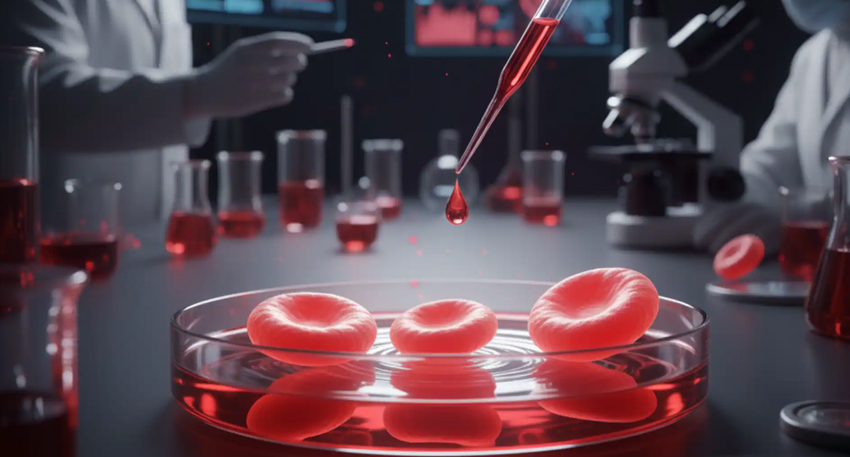
Scientists at the University of Cambridge have created a new lab-based model using stem cells that can produce human blood cells. This model copies early stages of human development and may help scientists better understand blood diseases and develop new treatments.
In this research, scientists used human stem cells to grow small 3D structures called hematoids. These structures form on their own in the lab and start producing blood after about two weeks. They act in a similar way to how blood develops in an early human embryo during the fourth and fifth weeks of growth.
Hematoids are not real embryos. They do not have parts like a placenta or yolk sac, and they cannot develop into a full human. However, they still form three important layers that later become different tissues, including blood.
At first, the cells form basic layers. By day eight, the researchers observed cells that can beat like heart cells. Around day thirteen, red spots appeared, showing that blood cells were forming.
Also Read: Murder charges filed against woman after use of abortion pills
The stem cells used in this process can come from different types of human cells. These cells can turn into many kinds of blood cells, including red blood cells that carry oxygen and white blood cells that fight infection.
Researchers also found that these lab-grown cells can develop into immune cells like T-cells, which are important for the body’s defense system. This makes the model useful for studying diseases like leukemia and testing new medicines.
This method is more natural than older techniques because it allows cells to develop in their own environment without added chemicals.
Scientists believe this breakthrough could help in developing new treatments and even patient-specific therapies in the future.