

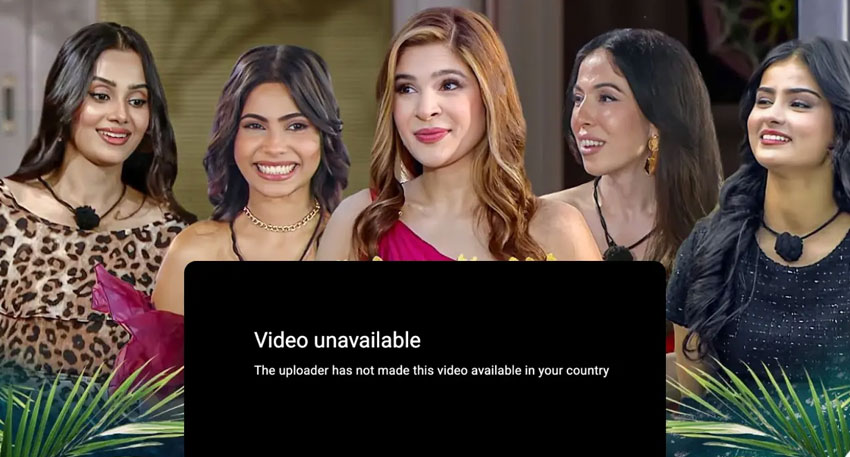
The show, also called “Eternal Love or Lazawal Ishq”, was Pakistan’s first Urdu reality series of its kind. It followed a format similar to the British hit “Love Island” and showed young men and women living together to find compatible partners.
The producers said the program may not be viewable in the country due to political reasons. Although the show is no longer available on YouTube in Pakistan, it can still be watched in other regions.
In an Instagram post, the show advised Pakistani viewers to use virtual private networks to continue watching. This message quickly spread among fans on social media.
Also Read: Hania Amir, Fahad Mustafa shine bright at Lux Style Awards 2025
YouTube did not respond immediately to a request for comment on why the show was taken down in Pakistan. No official reason has been shared so far.
Controversy over the show
The trailer opens with actor Ayesha Omer entering a villa in a white dress. Contestants then meet each other and choose partners to test their compatibility over 100 planned episodes.
The Urdu-language show gained strong online attention. Its first trailer crossed two million views, showing clear interest among young, digitally active audiences.
The buzz also highlighted a growing gap between younger viewers and traditional groups worried about changing social values.
A petition was filed with the Pakistan Electronic Media Regulatory Authority (PEMRA), asking for a ban. The petition claimed the show violated religious and social values by showing unmarried men and women living together.
PEMRA confirmed receiving many complaints but said it has no authority over digital platforms. It suggested contacting the Pakistan Telecommunication Authority (PTA), which regulates online content. The PTA did not comment on the issue.


