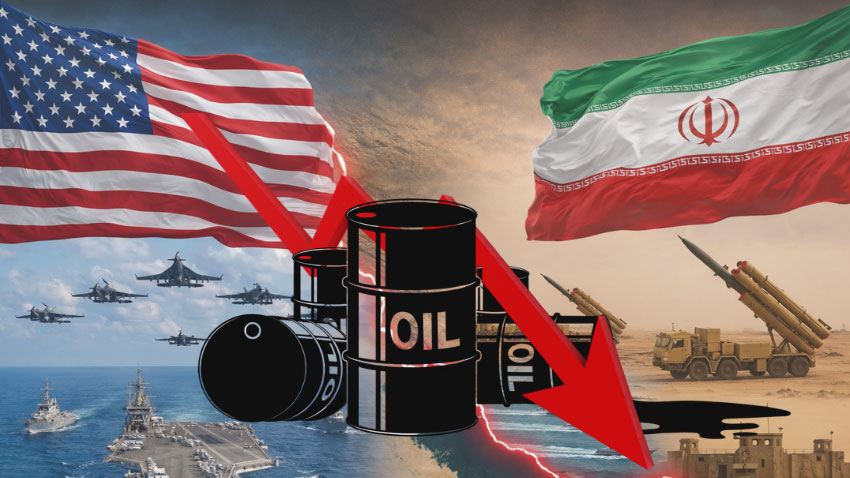
Oil prices dropped sharply on Monday after US President Donald Trump said Iran was “seriously talking” with Washington, hinting at easing tensions with a key OPEC member.
Brent crude futures fell $2.81, or 4.1%, to $66.51 per barrel in early trading. US West Texas Intermediate crude dropped $2.70, or 4.1%, to $62.51 per barrel.
The decline came after both oil benchmarks hit multi-month highs in previous sessions. Those gains were driven by fears of a possible military clash between the United States and Iran.
Also Read: Gold prices tumble sharply in Pakistan
Trump had repeatedly warned of action against Iran if it failed to reach a nuclear deal or continued cracking down on protesters. These threats had kept oil prices supported throughout January, according to analysts.
Priyanka Sachdeva of Phillip Nova said the recent drop was also due to a stronger US dollar, which makes oil more expensive for buyers using other currencies and often pressures prices lower.
On Saturday, Trump told reporters that Iran was “seriously talking,” shortly after senior Iranian official Ali Larijani said preparations for negotiations were underway.
Market analysts also pointed to reports that Iran’s Revolutionary Guards had no plans for live-fire drills in the Strait of Hormuz, easing fears of supply disruption.
Tony Sycamore of IG said the oil market viewed these signals as a step back from confrontation, leading traders to lock in profits after last week’s rally.
Also Read: SPI eases as food items and LPG prices increase, PBS reveals
Meanwhile, OPEC+ decided to keep oil output unchanged for March. The group had already frozen planned production increases through March 2026 due to weaker seasonal demand.
Capital Economics warned that despite geopolitical risks, the oil market remains well supplied, which could push Brent crude prices lower by the end of 2026.