

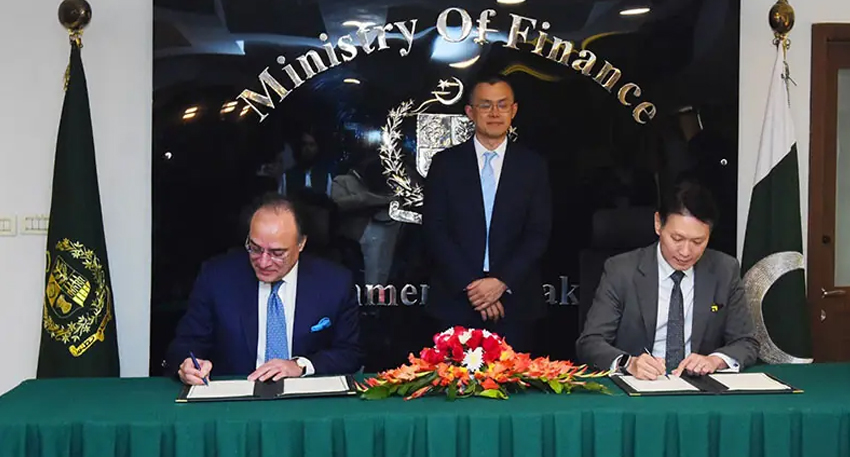
Pakistan has signed a memorandum of understanding (MoU) with global crypto exchange Binance to study the digital tokenisation of government-owned assets, the finance ministry said. The plan focuses on improving market access and transparency through blockchain technology.
The proposed tokenisation includes sovereign bonds, treasury bills, and commodity reserves such as oil, gas, metals, and other raw materials owned by the state. Tokenisation means turning real-world assets into digital tokens that can be traded securely.
Separately, Pakistan has granted initial regulatory clearance to Binance and digital asset platform HTX. The approval allows both firms to register with regulators, set up local subsidiaries, and begin preparations for full exchange license applications.
According to the finance ministry, the initiative could involve assets worth up to $2 billion, subject to regulatory approval. Officials believe this could help improve liquidity and increase international investor confidence.
Also Read: Crypto alert: Bitcoin sinks to six-month low as risk assets face heavy sell-off
Finance Minister Muhammad Aurangzeb said the agreement reflects Pakistan’s reform path and called it “a long-term partnership.” Binance founder Changpeng Zhao described the move as “a great signal for the global blockchain industry and for Pakistan.”
In a significant step towards leveraging emerging financial technologies to strengthen Pakistan’s capital markets and enhance global investor access, the Ministry of Finance, Government of Pakistan, today signed a Memorandum of Understanding (MoU) with Binance Investments Co.,… pic.twitter.com/XXc0h8jJK1
— Ministry of Finance, Government of Pakistan (@Financegovpk) December 12, 2025
The Pakistan Virtual Assets Regulatory Authority (PVARA) said early approvals were issued after reviewing governance and compliance controls. Chair Bilal bin Saqib said Pakistan has launched a phased licensing system where strong compliance will decide who moves ahead.
This development comes as Pakistan accelerates its digital finance reforms. The government has created the ‘Pakistan Crypto Council’, established the ‘Virtual Assets Regulatory Authority’, and is drafting a formal licensing framework for crypto platforms.
Officials say Pakistan now ranks as the world’s third-largest crypto market by retail activity. A central bank digital currency pilot and a Virtual Assets Act are also planned for 2025.
Earlier, Pakistan’s crypto council signed a letter of intent with U.S.-based World Liberty Financial to explore stablecoins, tokenisation, and broader digital-asset infrastructure.


