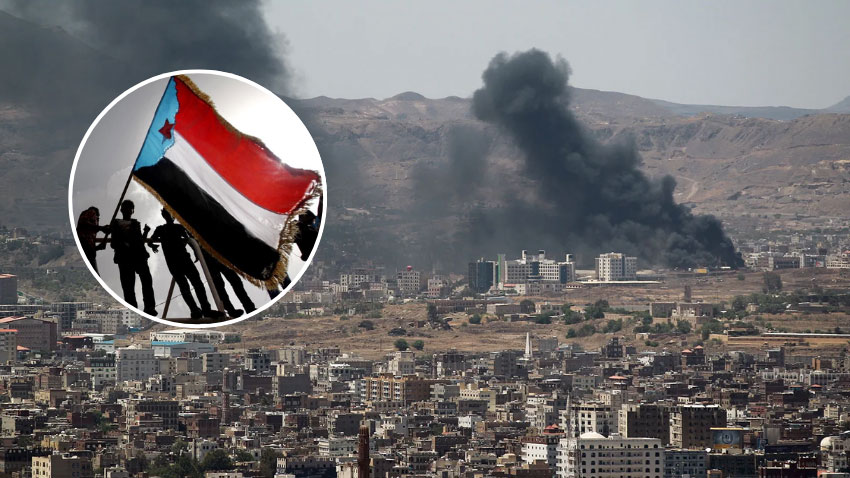
Authorities said they successfully reclaimed the al-Khasha’a camp, the largest and most strategic base in the region. Hadramout’s governor, Salem Ahmed Saeed al-Khunbashi, was appointed to lead the operation, giving him full military, security, and administrative authority.
He described the mission as a preventive step to restore security and prevent the province from sliding into chaos. “This is not a declaration of war,” the governor said, emphasizing the move was to protect civilians and strategic sites.
بيان هام للمتحدث الرسمي للقوات المسلحة الجنوبية، المقدم/ محمد النقيب#العدوان_السعودي_على_الجنوب#دوله_الجنوب_العربي#الامارات_الحليف_الصادق#العليمي_مجرم_حرب#عدن_المستقلة #AIC pic.twitter.com/MFEJ5PDt4z
— قناة عدن المستقلة AIC TV (@aicadentv) January 2, 2026
Also Read: Saudi airstrikes hit Yemen’s Mukalla over UAE arms shipment to separatists
The Southern Transitional Council (STC), which controls large parts of southern Yemen, called the operation a violation of peace and said its forces are on full alert. The STC confirmed that three airstrikes targeted the al-Khasha’a camp, which can house thousands of troops and had been taken over by the separatists in December.

Tensions escalated further after Aden International Airport was shut down. Saudi Arabia’s ambassador blamed STC leader Aidarus Al-Zubaidi for refusing landing permission to a plane carrying a Saudi delegation seeking to mediate the crisis. Zubaidi ordered the airport closed, deepening the standoff and affecting flights in southern Yemen.
The conflict highlights the fragile balance in Yemen, with the government, southern separatists, and foreign actors like Saudi Arabia and the UAE playing critical roles. Hadramout’s oil-rich and culturally significant region has become the center of military and diplomatic tensions.
The government’s operation signals its determination to maintain authority, while the STC’s warnings point to potential escalation.
Also Read: Israel to ban 37 NGOs operating in Gaza
Analysts say the operation could reshape control in southern Yemen and affect regional stability. The outcome will depend on military coordination, separatist responses, and international diplomatic efforts to prevent further clashes.