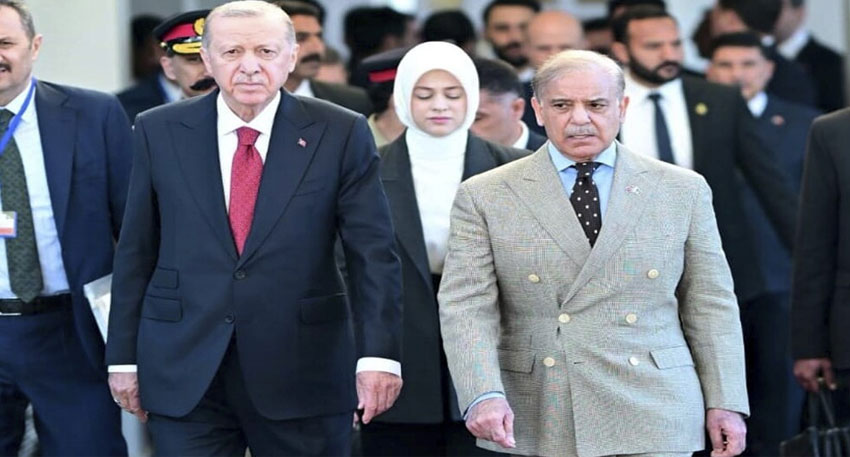
Efforts to reduce tensions between the United States and Iran have increased over the past two days, with Turkey, Egypt, and Pakistan acting as mediators. According to a U.S. source, these countries are passing messages between both sides in an attempt to stop the ongoing conflict.
Senior officials from the three countries held separate meetings with US envoy Steve Witkoff and Iranian Foreign Minister Abbas Araghchi. The goal of these discussions is to find a way to end the war and resolve key issues that have pushed the region towards instability.
A U.S. source said, “The mediation is ongoing and making progress. The discussion is about ending the war and resolving all outstanding issues. We hope to have answers soon.” This statement has raised cautious hope that the situation could improve.
Meanwhile, President Donald Trump announced that he is delaying any planned strikes on Iran’s power plants for five days. He said this decision came after what he described as “productive conversations” with Tehran. Following this announcement, global markets reacted positively, and oil prices dropped sharply.
Read more: Top 6 cheapest cars in Pakistan - compare prices, features and mileage
However, Iran has rejected these claims. Iranian officials said there have been no direct talks with the United States. They also claimed that Trump’s decision is aimed at lowering energy prices and “buy time” for possible military action.
Tensions remain high as Iran warned it could target electricity infrastructure across the region if the United States attacks its power network. The warning came after Trump threatened to “obliterate” Iran’s power system if it did not reopen the Strait of Hormuz, a key global shipping route.
In another development, US Treasury Secretary Scott Bessent said on NBC’s “Meet the Press” that “all options are on the table” regarding Kharg Island, which is a major Iranian oil hub. Reports suggest the US could even consider deploying troops to secure the area.
Iran responded strongly to this possibility, warning that it could mine the “entire Persian Gulf” if any invasion takes place. This has further increased fears of a wider regional conflict.
On the ground, the human cost of the war continues to rise. More than 180 people were injured in two Iranian missile strikes on southern Israel over the weekend. Despite strong air defenses, the attacks shocked many in Israel.
Read more: Why gold prices fall by record Rs43,600 in Pakistan today? What experts say?
Overall, more than 2,000 people have been killed across the Middle East as the war enters its fourth week. In Iran alone, over 1,200 people have died due to Israeli and US strikes, according to the Iranian Red Crescent Society.
In Lebanon, at least 1,000 people have been killed, while 15 deaths have been reported in Israel. The United States has also lost 13 service members, while two more died due to noncombat reasons.
The situation remains uncertain as diplomatic efforts continue alongside rising military threats.
Talks are happening but trust is low. Both sides are still preparing for conflict. Delay in strikes gives some hope. But one wrong move can restart escalation quickly.