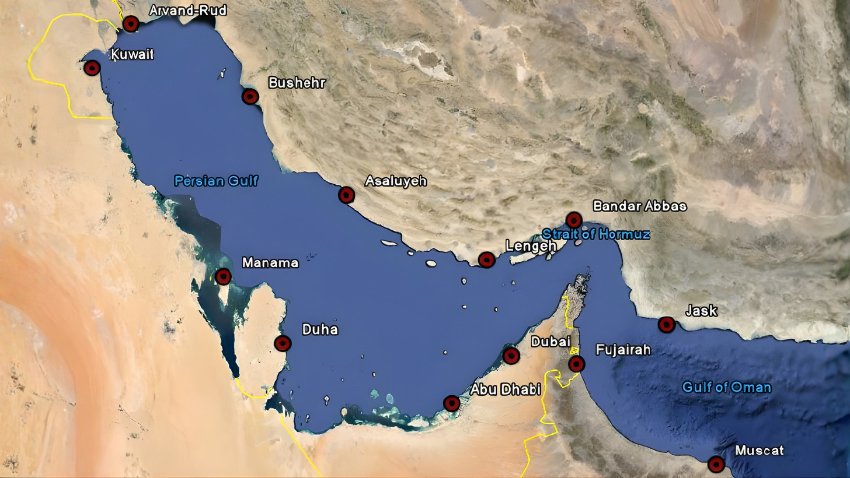
State broadcaster IRIB reported that Iran considers defending its maritime rights a “natural and legal duty”. According to the statement, vessels linked to enemy countries could face restrictions in the Strait of Hormuz, while other ships may pass under regulations set by Tehran.
Iran also accused the United States of imposing illegal restrictions on international waters, calling such actions “piracy”.
Iranian officials warned that if the safety of their ports is threatened, no port in the region would remain secure. The warning comes at a time when the fragile ceasefire in the Middle East is already under pressure.
Meanwhile, reports suggested that US President Donald Trump and his advisers are considering limited military strikes against Iran after negotiations in Islamabad failed to produce a final agreement. The talks were the first direct meeting between the two countries in more than a decade.
Also Read: Iran warns of $5 petrol after Strait of Hormuz blockade threat escalates
The US military also announced plans to begin a naval blockade around Iranian ports and coastal areas. According to the US Central Command, the blockade would apply to vessels entering or leaving Iranian ports in the Arabian Gulf and the Gulf of Oman. However, ships traveling to non-Iranian ports through the Strait of Hormuz would not be stopped.
Trump also warned that any vessel paying tolls to Iran in international waters would not receive safe passage. He further said the US Navy would start removing mines that Iran allegedly placed in the Strait of Hormuz, a crucial route that handles about 20 percent of global oil shipments.
Iran reacted strongly to the statements. The Islamic Revolutionary Guards warned that foreign warships approaching the strait could be seen as a violation of the ceasefire and would face a firm response.
Major disagreements between the two sides remain unresolved. The United States has demanded that Iran stop uranium enrichment, dismantle enrichment facilities, and cut support to regional groups such as Hamas, Hezbollah, and the Houthis. Iran has rejected these demands.
Also Read: Trump orders blockade of Strait of Hormuz, targets Iran oil exports
Iranian officials said several issues were discussed during the Islamabad talks, but the nuclear program and the Strait of Hormuz remained the main obstacles. Foreign Minister Abbas Araghchi said Iran faced “maximalism, shifting goalposts, and blockade” just when an agreement seemed close.
Global markets have already started reacting. Oil prices surged above $100 per barrel after news of the blockade plan spread, while shipping companies began avoiding the Strait of Hormuz due to security concerns.
Despite the rising tension, Trump said he still believed Iran might return to negotiations. However, he later added that the United States could proceed with its plans even if Tehran refuses further talks.