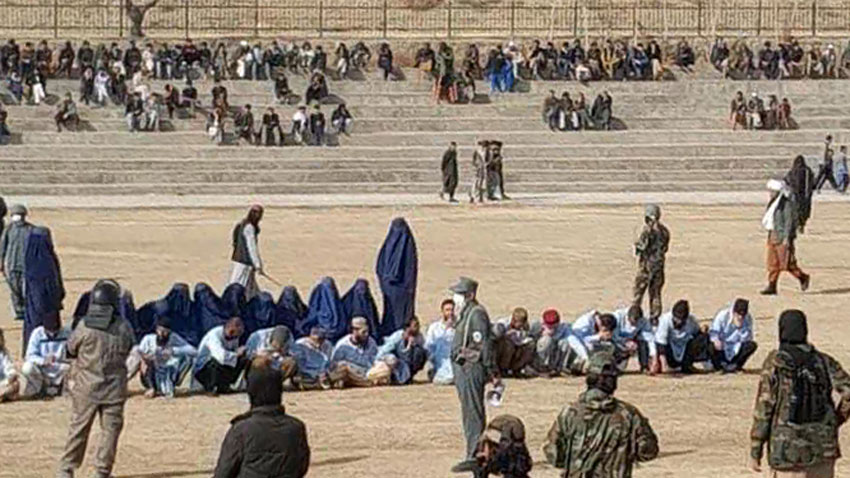
New data shows that the Taliban government carried out at least 1,186 floggings and six public executions between March 2025 and March 2026. The figures are based on official statements from the Taliban’s Supreme Court.
The actual number may be even higher, as the data does not include the last 12 days of a recent month. This suggests that more punishments could have taken place.
These punishments were reported in many provinces, including Kabul, Kandahar, Herat, Nangarhar and others. This shows that such actions are happening widely across the country.
Reports indicate that the use of corporal punishment increased in recent months. Women were also among those punished, with nearly 100 women flogged over an eight-month period. Many of these punishments were carried out in public places.
Read more: Why Trump bows before Iran’s steadfastness by lifting oil sanctions, CNN exposes
Human rights experts have raised serious concerns over these developments. They say such actions reflect increasing restrictions under Taliban rule and create fear among people.
A human rights researcher said, “These punishments violate basic human rights standards and create a climate of fear in society.”
Public executions were also carried out under the principle of qisas. In one recent case, a man was executed in a sports stadium in Khost in front of a large crowd, including children.
Other executions were reported in Badghis, Farah and Nimroz, showing that such punishments are continuing in different regions.
During the same period, the Taliban introduced a new penal code. This move has been widely criticised internationally for being harsh and lacking proper legal protections.
The authorities have also taken action against dissent. In one case, a man in Kapisa was given 39 lashes and sentenced to one year and six months in prison for what was described as “propaganda against the system.”
In another case, a person in Badghis was flogged and jailed for allegedly insulting Taliban leader Hibatullah Akhundzada. Despite global criticism, the Taliban have defended these punishments as part of Islamic law.
However, rights groups and international observers warn that such actions may further isolate Afghanistan and raise serious concerns about basic freedoms.