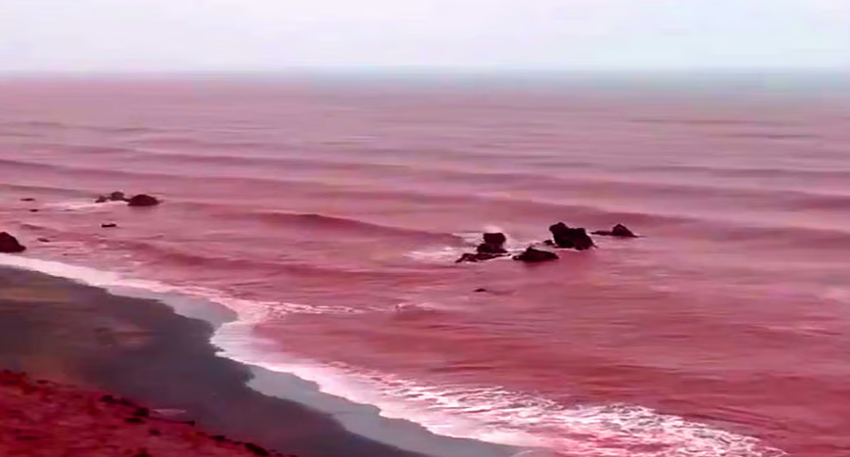
Videos and images show rainwater washing iron-rich red soil from the island’s slopes into the sea, coloring the shoreline and shallow waters in a striking red hue.
Hormuz Island, located in the Strait of Hormuz in the Arabian Gulf, is well-known for its naturally red soil and multicolored landscapes. The red soil, locally called golak, is rich in iron oxide and other minerals, which gives the beaches their signature red color. When heavy rains hit, torrents of this soil flow into the ocean, creating the dramatic visual effect now seen by tourists and online audiences.
Also Read: Guinness World Records boycotts Israel amid unstable situation
The rainfall-induced color change is a celebrated, though occasional, phenomenon tied to the island’s unique geology. While some have described it as “blood rain,” there is no biological material involved; the red appearance comes entirely from natural minerals mixing with rainwater.
Hormuz Island, also known as the “Rainbow Island” for its diverse terrain, is a year-round attraction for travelers and photographers. Beyond the red beaches, the island features cliffs and landscapes in shades of yellow, orange, and other colors formed over thousands of years due to complex geological processes.
Tourists flock to the island to witness these vibrant natural displays, with recent viral videos drawing global attention and highlighting Hormuz Island as a unique geological and cultural treasure in Iran.
Today’s rain on Hormuz Island in southern Iran caused the seawater along the shore to turn red, creating striking scenes. pic.twitter.com/wU4xhZKKOa
— Weather Monitor (@WeatherMonitors) December 16, 2025