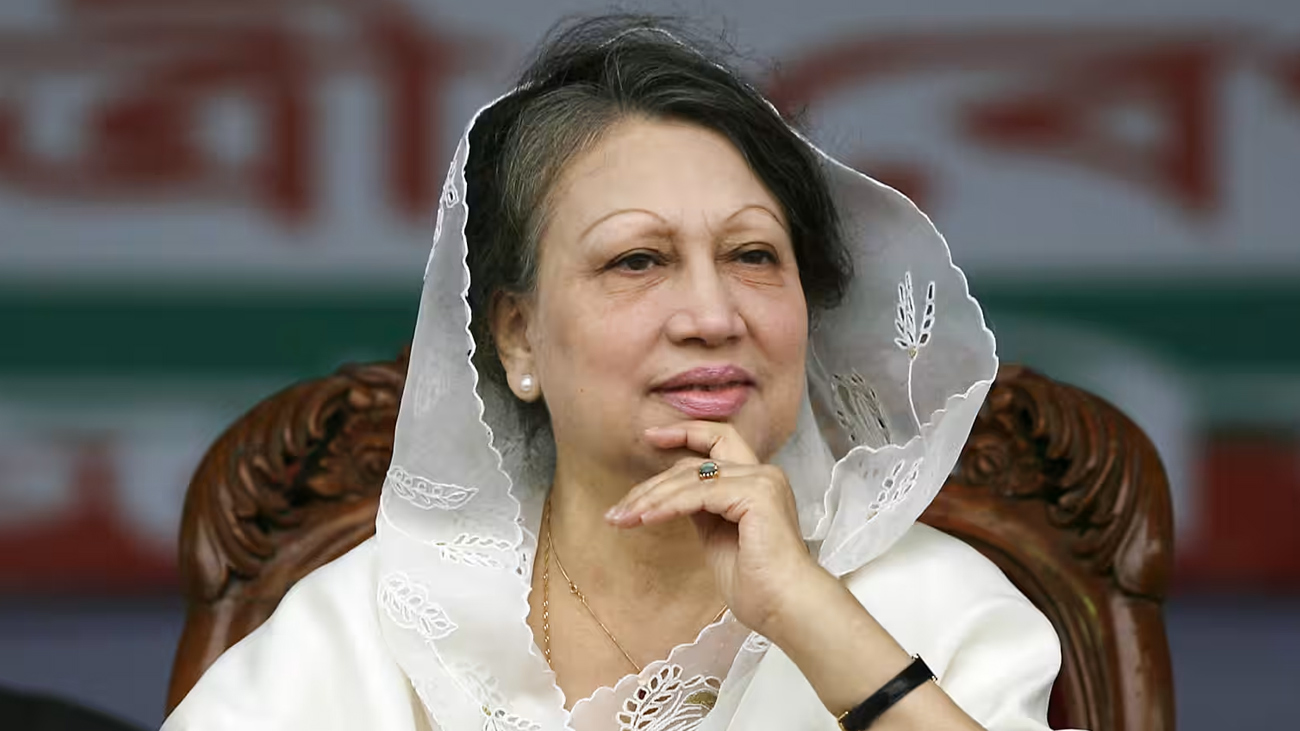
Khaleda Zia, Bangladesh’s first woman prime minister and one of the most influential yet polarising figures in South Asian politics, passed away early Tuesday morning at the age of 80. She breathed her last at 6:00am local time at Evercare Hospital in Dhaka after battling multiple chronic health conditions.
According to the Bangladesh Nationalist Party (BNP), Khaleda Zia had been hospitalised since November 23 due to a severe lung infection. Doctors confirmed she was also suffering from advanced liver cirrhosis, diabetes, arthritis, and long-standing heart and chest complications. Her condition had remained critical for weeks, prompting appeals for prayers from political leaders and supporters nationwide.
In an official statement, the BNP expressed deep sorrow over her death, describing her as a “beloved national leader” and urging citizens to pray for her departed soul. Interim government chief Muhammad Yunus, who had earlier called Khaleda Zia a “source of utmost inspiration,” also expressed condolences.
A Nation at a Political Crossroads
Khaleda Zia’s death comes at a crucial moment for Bangladesh as the country prepares for parliamentary elections scheduled for February 2025. The BNP remains a major political force, and her passing is widely seen as a turning point for the opposition.
Her elder son, Tarique Rahman, acting chairman of the BNP, recently returned to Bangladesh after nearly 17 years in self-imposed exile. He is expected to play a central leadership role in the party during the upcoming elections.
Since August 2024, Bangladesh has been governed by an interim administration led by Nobel Peace Prize laureate Muhammad Yunus, following a student-led uprising that ended Sheikh Hasina’s long rule.
From Personal Tragedy to Political Power
Born on August 15, 1946, in Dinajpur, Khaleda Zia entered politics after the assassination of her husband, President Ziaur Rahman, during a failed military coup in 1981. Initially viewed as politically inexperienced, she rose rapidly to prominence and assumed leadership of the BNP in 1984.
She played a decisive role in the mass movement that toppled military ruler Hussain Muhammad Ershad in 1990, paving the way for democratic elections. In 1991, Khaleda Zia won what is widely regarded as Bangladesh’s first free and fair election, becoming the country’s first female prime minister.
She was also only the second woman, after Pakistan’s Benazir Bhutto, to lead a democratic government in a Muslim-majority country.
Also Read: Bangladesh’s Tarique Rahman returns after 17-year exile – Is he next PM?
Achievements and Governance
During her first term (1991–1996), Khaleda Zia restored the parliamentary system, shifting power from the presidency to the prime minister’s office. Her government promoted foreign investment and introduced free and compulsory primary education.
After a brief electoral defeat, she returned to power in 2001 with a landslide victory and served until 2006. However, her second term was marred by rising militancy, political instability, and persistent corruption allegations.
The ‘Battling Begums’ Era
Khaleda Zia’s rivalry with Awami League leader Sheikh Hasina defined decades of Bangladeshi politics. Known as the “Battling Begums,” the two leaders alternated power amid election boycotts, mass protests, and violent clashes that frequently paralysed the country.
Tensions peaked after a 2004 grenade attack on a rally addressed by Hasina, killing over 20 people. Although Khaleda’s government later moved against extremist groups, political instability deepened.
Legal Battles and Final Years
In 2018, Khaleda Zia was convicted in a corruption case involving a charitable trust and sentenced to prison. She consistently rejected the charges as politically motivated. Due to deteriorating health, she was shifted to house arrest in 2020.
Following Sheikh Hasina’s removal from power in 2024, Khaleda was released. In early 2025, Bangladesh’s Supreme Court overturned her conviction, while her son Tarique Rahman was also cleared in long-standing legal cases.
Despite years away from public office, Khaleda Zia retained deep influence over Bangladesh’s political landscape through the BNP.
End of an Era
Khaleda Zia served as prime minister three times and remained a dominant figure in Bangladesh’s opposition politics for more than three decades. Her death is being widely viewed as the close of a defining chapter in the nation’s modern history, with political implications resonating across South Asia.
BNP officials said funeral prayers and burial arrangements will be announced later.