

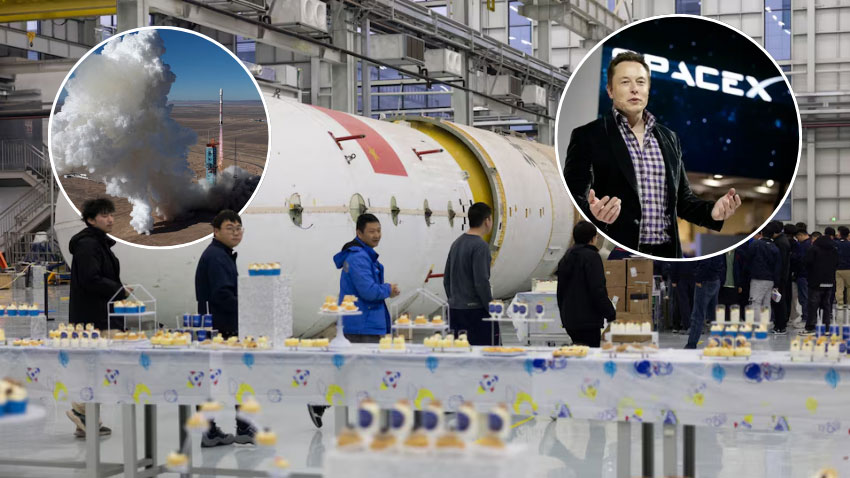
The Beijing-based startup recently became the first Chinese company to test a reusable rocket. Although the Zhuque-3 test failed, the attempt itself marked a major step forward and drew attention across the global space sector.
LandSpace openly says it takes inspiration from Elon Musk’s SpaceX. Company engineers say SpaceX’s willingness to test, fail, and improve quickly is what makes it successful, and that approach is now guiding LandSpace’s work.
Zhuque-3’s chief designer Dai Zheng said he left China’s main state-owned rocket developer in 2016 because he wanted to help build a Chinese version of a reusable launch system. He believes reusability is the future of spaceflight.
LandSpace aims to provide China with a low-cost launch option similar to SpaceX’s Falcon 9. This is important for Beijing’s long-term plan to deploy up to 10,000 satellites in the coming decades. Company officials stress that studying Falcon 9 is about learning proven engineering ideas, not copying. They say calling Zhuque-3 a “Chinese Falcon 9” is a compliment, not criticism.
Also Read: Has Elon Musk become the world’s first trillionaire?
LandSpace’s startup culture is already changing how China approaches space launches. In the past, failed launches were rarely discussed publicly, but state media recently reported failed recovery attempts by both private and state-owned firms. The company has also opened parts of its engine factory to foreign media, signaling greater transparency and confidence.
China allowed private investment in the space sector in 2014, leading to the rise of startups like LandSpace. Now, Beijing is encouraging leading firms to raise funds through public listings to support risky but innovative projects.
Dai noted that SpaceX’s strong financial backing allows it to absorb losses during testing. He said China is now moving in a similar direction by letting capital markets support commercial space companies.


