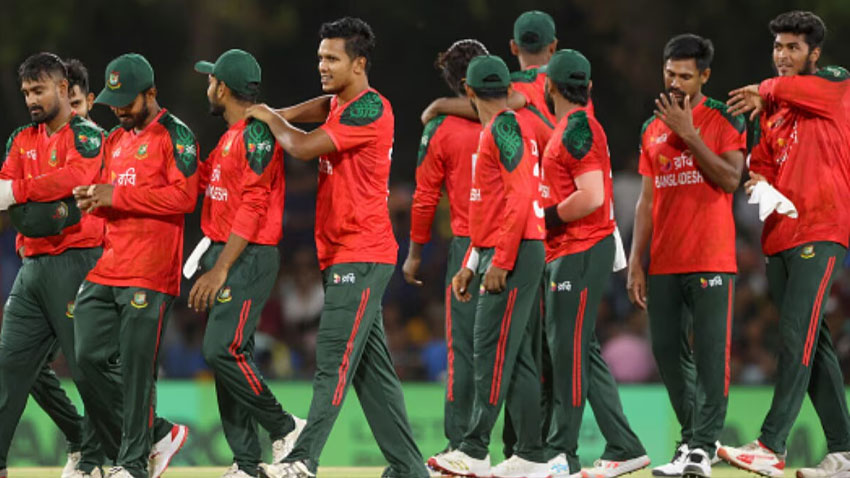
The International Cricketers’ Association described Bangladesh’s exclusion from next month’s T20 World Cup as a painful moment for the sport. The group said the situation should push all stakeholders to bring the game together rather than allow it to drift apart.
As a former international cricketer who has played in Bangladesh and in ICC events, I’m deeply disappointed by today's ICC’s inconsistency. It accepted India’s security concerns for not touring Pakistan in 2025, yet appears unwilling to apply the same understanding to Bangladesh.…
Bangladesh were officially replaced by Scotland in the 20 team tournament after refusing to tour India. The decision followed safety concerns linked to strained political relations between the two neighbouring countries.
Bangladesh had requested that their matches be shifted to Sri Lanka, one of the event’s co hosts. However, the International Cricket Council turned down the request.
Read more: Pakistan announce 15-member squad for T20 World Cup 2026
The ICC said changing venues and schedules so close to the tournament’s February 7 start was not possible. As a result, Scotland stepped in to take Bangladesh’s place in the competition.
The development has sparked debate across the cricketing world, with many questioning how political tensions continue to impact major sporting events.
Bangladesh’s absence highlights deeper issues in world cricket. Politics and security are affecting the game. Many believe stronger dialogue is needed to protect the sport’s unity
“The withdrawal of Bangladesh from the T20 World Cup, and resulting absence of a valued cricketing nation from cricket’s pinnacle international T20 event, is a sad moment for our sport, the Bangladesh players and fans, and one that requires deep reflection,” World Cricketers’ Association (WCA) Chief Executive Tom Moffat said in a statement.
“Rather than allowing division or exclusion to take hold, we call on the games’ leaders to work with all stakeholders, including governing bodies, leagues and players, to unite the sport, not divide it.”
The events underline the current tension in South Asian cricket.
India’s fraught relations with Pakistan prompted the ICC to broker an arrangement allowing them to play at a neutral venue when their neighbour hosts a global tournament.
Read more: ICC releases revised schedule of T20 World Cup 2026
Following India’s refusal to travel to Pakistan for the Champions Trophy in 2025, a “hybrid model” was decided upon whereby India played all its matches in Dubai, chosen as a neutral venue.
As per the compromise, Pakistan are set to play all their matches at the upcoming T20 World Cup in Sri Lanka, though the Pakistan Cricket Board chief Mohsin Naqvi said on Saturday their participation was still not confirmed.
Very sad to see a cricket-loving nation like Bangladesh being deprived of cricket due to security concerns not being addressed.
When similar concerns were raised earlier, a neutral venue was approved. Standards cannot change from country to country.
ICC must act as the…
“The prime minister is not in Pakistan right now. When he returns, I’ll be able to give you our final decision,” Naqvi, who is also the country’s interior minister, told reporters.
Moffat said the WCA had become increasingly concerned by agreements not being honoured in the sport and by a lack of meaningful consultation with players and their representatives.
“It also highlights significant issues with the game’s existing operating model at the global level,” he added.
“These issues, if continued to be left unaddressed, will weaken trust, unity, and ultimately the health and future of the game we love.”
Former Pakistani captain and all-rounder Shahid Afridi said on the replacement of Bangladesh by Scotland that he was “deeply disappointed” by ICC’s “inconsistency”.
“As a former international cricketer who has played in Bangladesh and in ICC events, I’m deeply disappointed by today’s ICC’s inconsistency. It accepted India’s security concerns for not touring Pakistan in 2025, yet appears unwilling to apply the same understanding to Bangladesh.
“Consistency and fairness are the foundation of global cricket governance. Bangladesh’s players and millions of its fans deserve respect — not mixed standards. The ICC should build bridges, not burn them,” Afridi said in a post on social media platform X.
Former Pakistani batsman Mohammad Yousaf expressed similar views, saying: “Very sad to see a cricket-loving nation like Bangladesh being deprived of cricket due to security concerns not being addressed.
“When similar concerns were raised earlier, a neutral venue was approved. Standards cannot change from country to country. ICC must act as the International Cricket Council, not appear to serve the interests of any single board. Fairness and consistency are the foundation of global cricket.”