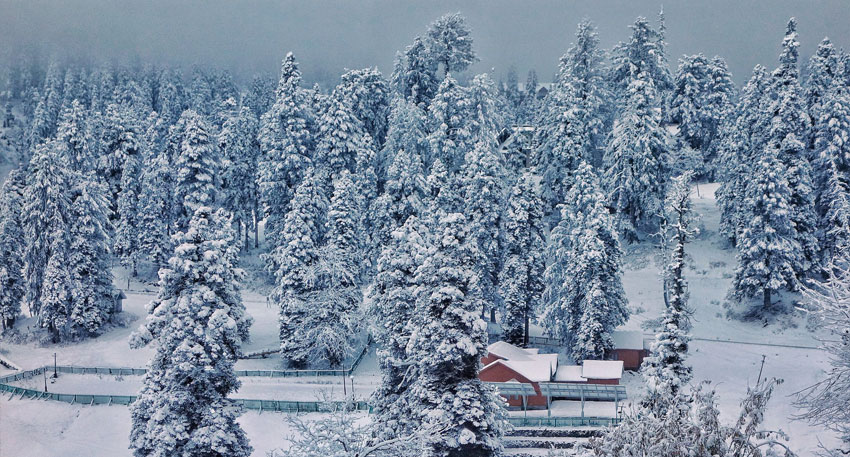
A new spell of snowfall in Pakistan’s upper regions has sharply increased the intensity of cold weather, while turning popular tourist destinations into winter wonderlands and drawing large crowds of visitors.
In Murree, often referred to as the “Queen of the Hills,” fresh snowfall brought joy to tourists, with many enjoying scenic views and winter activities. The mountains of the Galiyat region were also covered in a thick white blanket, enhancing the area’s natural beauty.
Significant snowfall was reported in several northern areas. The Lowari Tunnel received between one and a half to two feet of snow, while Chitral recorded up to twenty-eight inches. In many parts of Astore, snowfall reached nearly two feet. Snow also covered the mountains of Chilas and Upper Dir, further tightening the grip of winter.
In Battagram, heavy snowfall led to the closure of several link roads, causing difficulties for local residents. In Azad Kashmir’s Neelum Valley, snowfall continued for the third consecutive day. Tourist activity increased at the Arang Kel chairlift, though severe snowfall resulted in the closure of access roads to various tourist spots.
Also Read: Dense fog shuts major motorways across Pakistan
Meanwhile, light drizzle was recorded in and around Muzaffarabad. Balochistan also experienced a strong cold wave, with Ziarat recording a minimum temperature of minus four degrees Celsius, making it one of the coldest areas in the province.
Intermittent rain was reported in Islamabad and Rawalpindi, while Lahore remained under cloudy skies. Cold winds further intensified the chill in the provincial capital, adding to the wintery conditions across much of the country.
Authorities have advised travelers to remain cautious, particularly in snow-affected regions where road closures and harsh weather conditions continue to pose challenges.