Khaleda Zia was one of the most influential and controversial leaders in Bangladesh’s political history, whose name remained closely linked with power struggles, resistance movements, and intense political rivalry for decades. As Bangladesh’s first woman prime minister, she also stood among South Asia’s most prominent female leaders who carved a strong identity in male-dominated politics.
Her early life was far removed from politics. Khaleda Zia was known as a simple, quiet, and family-oriented woman, with her life centered around her husband and children. However, her destiny changed dramatically in 1981 after the assassination of her husband, former president and army chief Ziaur Rahman. Following this tragedy, she entered active politics and within a few years assumed leadership of the Bangladesh Nationalist Party (BNP).
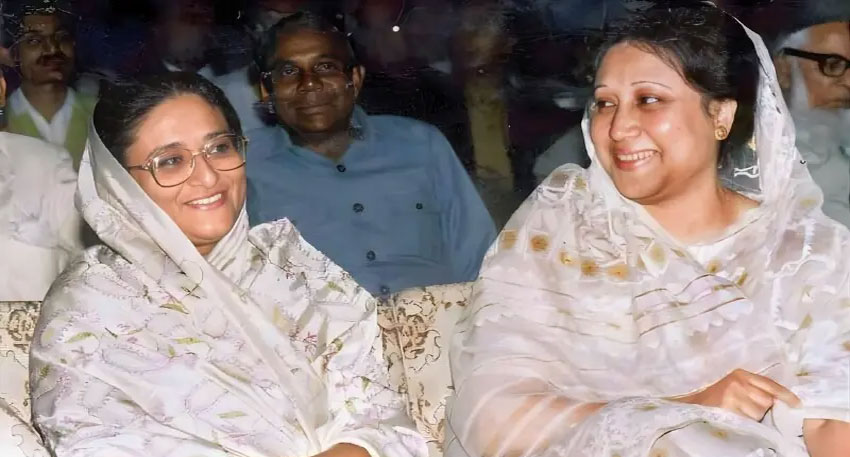
After taking charge of the BNP, Khaleda Zia focused her politics on poverty reduction, economic improvement, and democratic values. In 1990, she joined hands with Sheikh Hasina in a mass movement against military ruler Hussain Muhammad Ershad, which ultimately restored democracy in Bangladesh. Despite their shared struggle, the politics of power soon turned them into fierce rivals.
The 1991 general elections proved a turning point when Khaleda Zia secured an unexpected victory and became prime minister. During her first term, she abolished the presidential system, restored the parliamentary system, made primary education free and compulsory, and encouraged foreign investment to support the economy.
Although she lost power in 1996, she made a strong comeback in 2001. However, her second term was marked by controversy, including rising extremism, corruption allegations, and political instability. The 2004 grenade attack on Sheikh Hasina further deepened political bitterness, with blame directed at her government, which she consistently termed a conspiracy.
Her rule ended in 2006 amid political crisis and the formation of a military-backed caretaker government. The following years were the most challenging, as she faced corruption cases, imprisonment, declining health, and prolonged house arrest. In 2024, she was released, and in 2025 the Supreme Court acquitted her and her son Tarique Rahman.
Also Read: Govt announces to end contract doctor appointments
Khaleda Zia passed away on December 30, 2025, at the age of 80, marking the end of a defining era in Bangladesh’s politics. Her life symbolized struggle, power, imprisonment, rivalry, and endurance, leaving an indelible mark on the nation’s history.