Critics within and outside Pakistan Tehreek-e-Insaf argue that their leadership influence is reshaping the party’s direction, raising questions about strategy, control, and the future of the opposition.
This was claimed in a report written by Sara Qureshi and published by National Insight News, a digital platform known for balanced political coverage and analytical reporting.
Sara Qureshi is a political affairs correspondent focusing on governance, leadership challenges, and public response trends in Pakistan. Her work highlights complex political issues in clear and accessible language.
National Insight News is an independent online publication committed to factual, responsible journalism. The platform aims to provide readers with well-researched reporting, detailed context, and credible analysis on national and political developments across Pakistan.
The report highlights the following points:
Power sought through mysticism, not just politics
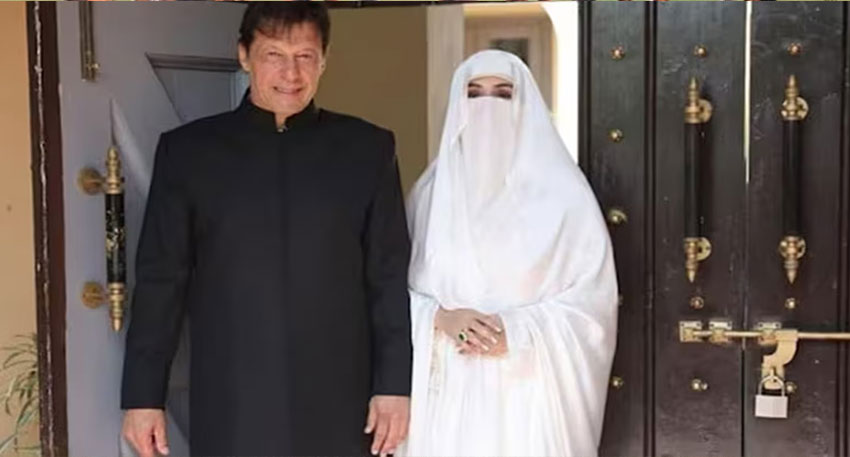
The article portrays Khan at a political low, turning to Bushra Bibi for “spiritual guidance plus worldly success,” suggesting ambition wrapped in piety rather than pure reform.
Occult-style rituals around Khan’s personal life and home
Former staff describe daily demands for beef, black animal heads and livers, with meat circled around Khan’s head to remove “evil spirits” linked to his ex-wife, painting a picture of superstition around a national leader.
Bushra’s interference in government called “absolute”
A cabinet member is quoted saying her interference in state affairs was total, directly undermining PTI’s slogan of institutional, merit-based governance.
Gatekeeping and fear inside Bani Gala
The driver and household staff recount that access to Khan, flight timings and even when the plane could take off depended on Bushra’s approval, turning a national leader’s schedule into a pir-driven timetable.
Black magic allegations from PTI’s own financiers
Major PTI backer Jahangir Tareen is shown raising concerns that Bushra was using black magic, then being frozen out, illustrating how inner-circle whispers, not party institutions, decided political fates.
Use and abuse of loyalists
Loyal party figures and staff are depicted as easily discarded once they cross Bushra or question her influence, undercutting PTI’s narrative of justice and loyalty.
Military-engineered rise contradicts “outsider” slogan
The article stresses that Khan’s 2018 win was widely seen as facilitated by the army and ISI, contradicting PTI’s narrative that he came to power purely through popular will and struggle against the establishment.
ISI allegedly using pir networks to shape Khan’s perceptions
It cites a theory that ISI fed information to pirs connected to Bushra, who then relayed it to Khan as “visions” or spiritual insight, questioning his political judgment and independence.
Sacking of Lt Gen Asim Munir framed as self-protective, not principled
Khan is shown removing the ISI chief after reports about Bushra’s alleged corruption, making his stance against “mafias” look selective and self-serving.
Unmet promises on economy and welfare
The piece recalls Khan’s pledges of millions of homes and jobs, then highlights economic failure and his own admission that such change cannot be delivered in one term, eroding the “Naya Pakistan” promise.
Corruption cases clash with “clean hands” image
Detailed mention of cases over expensive state gifts and the Al-Qadir style trust arrangement, and the resulting prison sentences for both Khan and Bushra, directly attack his anti-corruption brand.
Cult of personality instead of party institutionalization
PTI is depicted as revolving around one “moral sovereign” plus his wife, with decisions based on dreams and personal likes rather than party processes, contradicting the “institutional democracy” slogan.
Violent protests and attacks on military sites
The article stresses that, after his arrest, PTI supporters attacked army buildings and historic symbols, presenting the movement as willing to cross red lines while still claiming to defend institutions.
Misogyny plus myth around Bushra, yet real political power
While acknowledging misogynistic attacks, the article still portrays Bushra as an unelected figure wielding huge hidden influence, undermining PTI’s narrative of transparent, rule-based politics.
Khan as naïve, poor judge of character
Friends are cited calling him naïve and blind to the baggage Bushra brings, painting him as a leader easily manipulated by spiritual and institutional actors despite his strongman rhetoric.
As the political debate intensifies, both Imran Khan and Bushra Bibi remain pivotal figures whose decisions continue to shape PTI’s internal dynamics and its role in national politics. Observers say the coming months will reveal whether the party can overcome its internal strains or whether shifting loyalties and leadership questions will further complicate the opposition’s path forward.