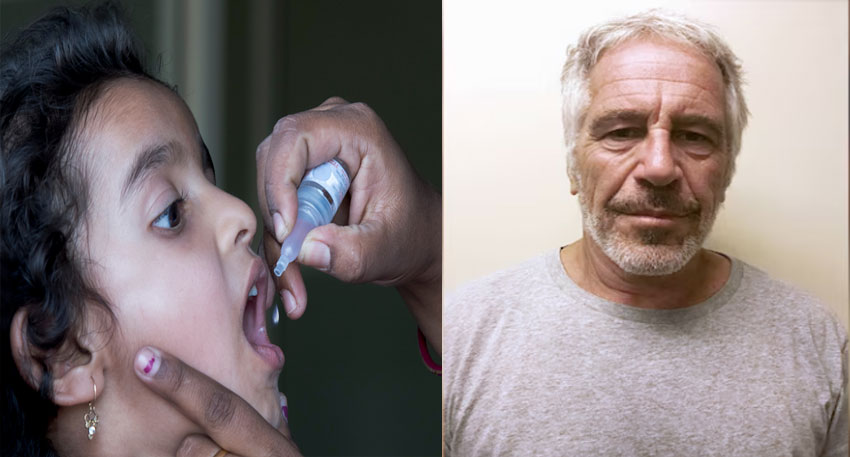
A newly released interview of Jeffrey Epstein has revealed a surprising claim about his involvement in health efforts in Pakistan and India. During the conversation, Epstein said, “with the money I gave to help try to eradicate polio in Pakistan and India.”
This statement has attracted global attention because it suggests Epstein tried to link himself to international public health efforts. Polio eradication programs in Pakistan and India have been supported by governments and international organizations for many years.
Epstein made this claim while discussing his activities and influence. He appeared to mention his financial contributions as part of a broader attempt to explain his role in global initiatives and his connections with powerful institutions.
However, the interview has also raised serious questions. Experts say Epstein’s statement needs verification, as polio eradication campaigns are mainly led by official organizations, charities and governments.
The release of this interview has once again brought Epstein’s past into the spotlight. His claims and statements continue to generate debate, especially because of his controversial history and criminal charges.
Read more: ‘Are you the devil himself?’: Jeffrey Epstein asked during an interview
Observers believe this revelation could increase scrutiny of Epstein’s past activities and financial contributions. It also highlights how Epstein tried to present himself as someone involved in global causes.
This claim may be Epstein’s attempt to improve his image. There is no clear proof mentioned in the interview. Such statements often create more questions than answers. It shows how Epstein tried to present influence beyond his financial world.
Epstein’s key words from the interview
During the interview with Steve Bannon, Epstein made several surprising and controversial statements about himself, his work, and his global influence.
One of the most important and shocking statements he made was about polio eradication. Epstein said:
“with the money I gave to help try to eradicate polio in Pakistan and India.”
This line suggests that Epstein claimed he had financially supported efforts to eliminate polio in countries like Pakistan and India.
Epstein also spoke about his public image
In the interview, Epstein appeared defensive about how the public viewed him. At one point, he was asked directly:
“Do you think you’re the devil himself?”
This question reflected how controversial and widely criticized he had become globally.
Epstein tried to present himself differently, implying that he saw himself as someone involved in science, philanthropy, and global issues, rather than the criminal image associated with him.
Epstein discussed his connections and influence
Epstein suggested he had connections with powerful people and had supported scientific research and global health programs.
He tried to frame himself as someone who funded important projects, including health and research initiatives.
However, his statements were controversial because many critics questioned his claims and motives.
Why this interview is important
This interview became significant because Epstein rarely gave recorded interviews. According to reports, Steve Bannon recorded many hours of discussions with Epstein for a planned documentary.
The interview later surfaced publicly and revealed Epstein’s own words about his influence, wealth, and global involvement.
Epstein tried to show himself as a powerful and important person.
He wanted people to believe he helped global causes like polio eradication.
But many people do not trust his claims.
His statements raised more questions instead of clearing his image.
This interview shows how Epstein saw himself, not how the world saw him.